

Updated October 29, 2026
Where AI is helping doctors, scientists and patients today, what’s still experimental, and how to use it for your own health without getting fooled.
The short version: AI is already part of medicine, mostly behind the scenes. More than 1,600 AI tools are authorized for use in the US, about three in four of them for reading scans. Four in five American doctors now use AI at work, and one in three adults asked an AI about their health last year. AI doesn’t operate on people by itself, and it doesn’t replace your doctor’s judgment. This page gathers everything we’ve written on AI in medicine, grouped by what you want to know, and shows you how to tell real progress from hype.
Not medical advice. This page explains how AI is being used in medicine; it can’t tell you what’s right for your health, so talk to a doctor or pharmacist about your own care. Facts checked against the linked sources on October 29, 2026. How we research and check our guides.
AI in medicine today
1,600+
AI-enabled medical devices authorized in the US; about 76% read scans
Where should you start?
Following the news
Start here if headlines leave you unsure what’s real.
Using AI for your health
Start here if you or someone you care for has questions.
Working in health care
Start here if you want AI to save time at work.
New to AI in general? Begin with what artificial intelligence is and how to use AI, then come back.
How do you read a medical AI headline?
Medical AI news moves fast, and headlines often sound further along than the research is. Before you get excited (or worried), ask four questions:
- Was it tested in people? Results in mice, in a dish or on old records often don’t carry over to living patients.
- Was it peer reviewed? A journal paper has been checked by other scientists. A press release, preprint or social post hasn’t yet.
- How many people (or animals) were involved? One case shows something is possible. Thousands show how well it works.
- Has a regulator approved it? In the US that means the FDA. Without it, your doctor usually can’t offer it outside a clinical trial.
We answer those questions in a Hype check box on our medical news posts. This is the one from our AI mouse surgery story:
Can AI diagnose disease?

Diagnosis is where AI is most established. About three in four of the FDA’s AI-enabled devices are for radiology, the reading of X-rays, scans and mammograms (FDA). In a Swedish trial of 106,000 women, breast screening with AI support found 29% more cancers and 12% fewer cancers were missed between screenings (82 against 93) (Lund University, on the Lancet study). And in October 2026, a small Harvard study of a patient-facing AI in primary care found that none of 98 conversations needed a supervising doctor to stop it for safety, though the AI made one factual error (Harvard Medical School).
- Can AI diagnose disease better than doctors?
- AI in medical imaging: how AI reads X-rays, MRIs and CT scans
- AI catches more breast cancers that doctors miss
- AI outperformed ER doctors at Harvard: the caveats
- How AI speeds up stroke treatment
- NASA’s AI doctor for deep space
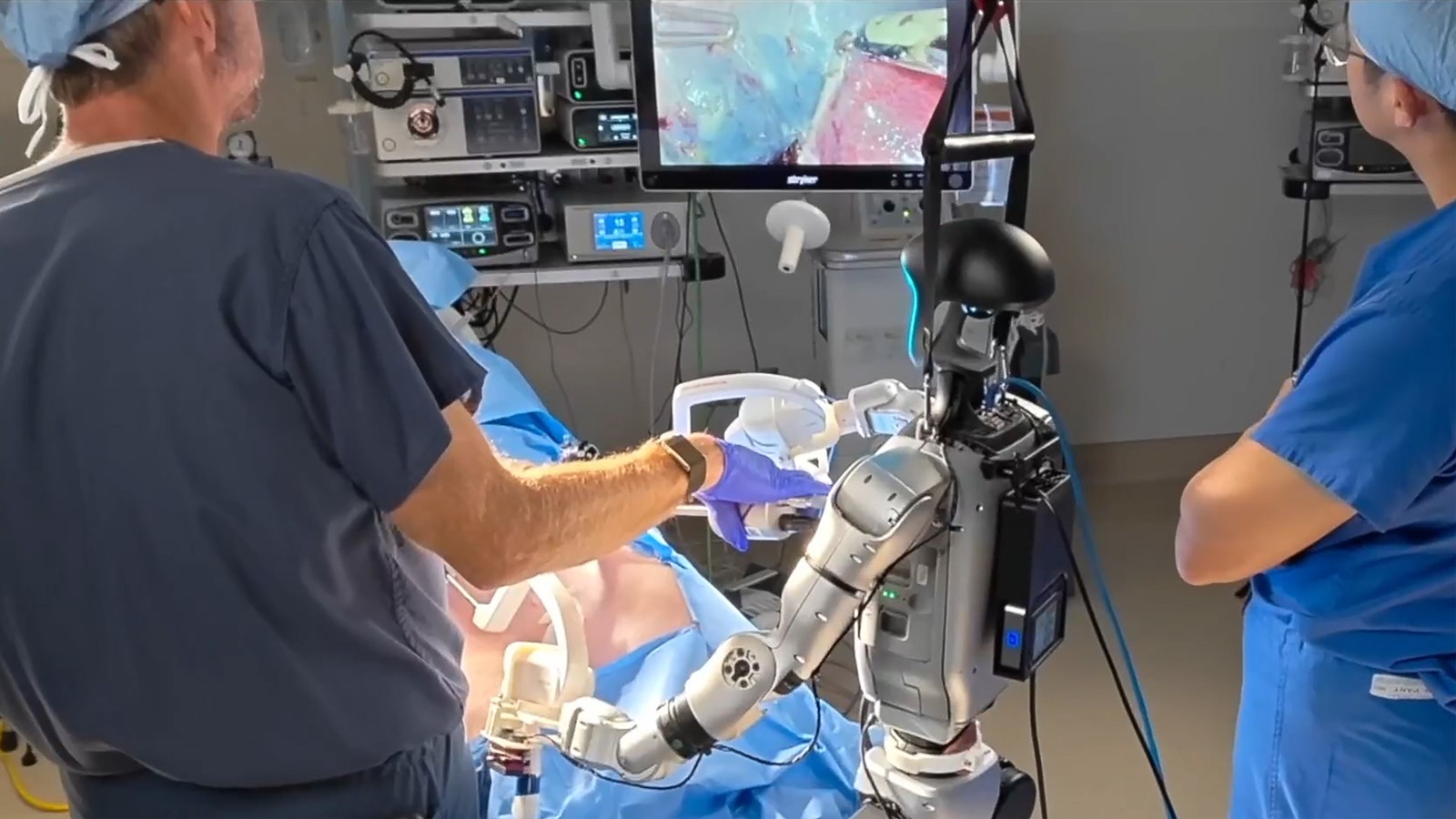
AI in surgery and medical robots

Robots help in many operating rooms, but a surgeon controls them. AI plays narrower roles: in studies, reading tumor tissue during brain surgery (Nature, 2024) or steering a camera. No robot is approved to operate on a person by itself. The first robot allowed in the US to draw blood without a person guiding the needle was authorized in August 2026, and a trained supervisor still oversees it (AABB). In the lab, things are moving faster: in October 2026 an AI agent picked a treatment and injected it into a mouse’s brain.
- An AI agent just operated on a mouse (with a roundup of AI in real operating rooms)
- The robotics and drones frontier
- Humanoid robots explained
- AI in surgery: what it does today (patient guide)
- What is autonomous surgery? (glossary)
- What is stereotaxic surgery? (glossary)
How is AI finding new medicines?

Drug discovery usually takes more than a decade. AI can speed up the early steps: predicting protein shapes, suggesting molecules and choosing targets. One of the furthest along is rentosertib, a drug for lung scarring designed with generative AI by Insilico Medicine. In September 2026 the first patient got a dose in its Phase III trial, the last stage of testing before a company can ask for approval (Insilico). No AI-designed drug has been approved yet.
- AI in drug discovery: from AlphaFold to new medicines
- AlphaFold: how AI solved protein folding
- Demis Hassabis, the mind behind AlphaFold
- The biotech frontier hub
- What is gene therapy? (glossary)
AI and the brain

Brain implants that turn thoughts into text or cursor movement are in human trials, and AI is what decodes the signals. AI is also helping research into memory and aging. Most of this work is still in small studies.
- Brain-machine interfaces in 2026: a beginner’s guide
- The brain and neuroscience tech frontier
- AI can read thoughts at 74% accuracy: what it means
- What is Neuralink?
- What is a brain-computer interface?
- AI, memory and healthy aging
- Why writing by hand activates more of your brain

Using AI for your own health
OpenAI says more than 230 million people ask ChatGPT health and wellness questions every week, and in January 2026 it launched a separate ChatGPT Health space (Fortune). Used well, a chatbot can explain a diagnosis in plain words, translate a letter from the hospital, or help you prepare for an appointment, for yourself or for a parent or child you look after. The catch is that it can sound confident and still be wrong.
Mental health is the most sensitive area. In what Dartmouth calls the first clinical trial of a generative AI therapy chatbot, its Therabot cut depression symptoms by 51% on average. Its makers stress it is still being tested, and it isn’t available to the public (Dartmouth). If you’re in crisis or thinking about suicide, talk to a person, not a chatbot: in the US, call or text 988 (the Suicide & Crisis Lifeline), or call 911 in an emergency. Elsewhere, call your local emergency number.
Before you type anything personal, know this: when you put health details into a consumer chatbot yourself, the US medical privacy law HIPAA generally doesn’t protect them. It covers your doctor, hospital and insurer, and the companies working for them, not apps you choose to use on your own (FTC). A few habits help:
- Leave out your name, date of birth, address and ID numbers.
- Describe the problem instead of uploading whole records when you can.
- Check the app’s settings for whether your chats are used for training, and turn that off.
- Treat the answer as a starting point for a conversation with a doctor or pharmacist, never as the final word.
A low-risk way to start is to ask AI to help you prepare for a visit, not to diagnose you. If symptoms are severe or came on suddenly, call your doctor or 911 instead. Copy this prompt into ChatGPT, Claude or Gemini and fill in the brackets:
I have a doctor’s appointment about [describe the problem in a sentence or two]. It started [when]. It gets better or worse when [what helps or makes it worse]. I currently take [medicines, or “no medicines”].

Please help me get ready. Don’t diagnose me or suggest treatments or changes to my medicines. If anything I describe sounds like it needs urgent care, tell me to contact a doctor now instead of waiting. Otherwise:
1. Write a short, clear summary of my symptoms I can read out in under a minute.
2. Suggest 5 questions I should ask the doctor.
3. List anything I should bring or write down before the visit (medicines, dates, measurements).
Use plain language and keep it to one page.- AI health apps for everyday people: what’s worth using
- My AI medical second opinion
- AI for mental health: therapy bots, mood tracking and support
- I built an agent to do my health worrying
- How to write better AI prompts
For people who work in health care
Most US doctors now use AI at work, most often to summarize research and write up clinical notes (AMA, 2026). These guides show how, by profession:
- Doctors: Claude for doctors, AI for doctors, best prompts for doctors, best AI medical scribes, Claude for healthcare
- Nurses and students: best prompts for nurses, AI for nursing students, AI for medical students
- Dentists: Claude for dentists, AI for dental offices, best prompts for dentists
- Pharmacy: Claude for pharmacists, AI for pharmacists, AI for pharmacies
- Therapy: Claude for therapists, AI for therapists, best prompts for therapists, AI for physical therapists
- Vets: Claude for veterinarians, AI for veterinarians, AI for vet clinics, best prompts for vets
- Other roles: home health aides, hearing aid specialists, medical spas
More professions are in our AI for Professions hub, and the apps we use ourselves are in AI tools we use.
Will AI replace doctors?
Not on current evidence. AI is good at narrow tasks such as spotting patterns in scans, but medicine also means examining people, weighing what they want, and taking responsibility. The World Health Organization’s guidance on AI chatbots and similar models in health lists more than 40 recommendations and warns of “false, inaccurate, biased, or incomplete statements” (WHO). Regulators are still working out the rules: the FDA asked for public comment on generative AI medical devices in August 2026 (FDA).
- Can AI replace doctors, lawyers or therapists?
- What is AI in healthcare? (glossary)
- What is FDA clearance? (glossary)
Common questions
Is it safe to ask ChatGPT about my health?
It can help you understand terms and prepare questions, but it can also be wrong while sounding sure. Leave out personal identifiers, check anything important with a doctor or pharmacist, and for urgent symptoms call your doctor or 911.
Is AI used in hospitals today?
Yes. More than 1,600 AI-enabled devices are authorized in the US, mostly for reading scans, and four in five US doctors use AI in some part of their work.
Has AI ever done surgery on a person by itself?
No. Robots assist surgeons, and AI helps with narrow tasks, but no system is approved to operate on a person on its own. The first robot allowed in the US to draw blood without a person guiding the needle was authorized in August 2026.
Are there any drugs designed by AI?
Several are in late-stage trials. Insilico’s rentosertib for lung scarring, designed with generative AI, entered a Phase III trial in September 2026. None has been approved yet.
Is my health data private when I use an AI chatbot?
Not in the way your medical records are. HIPAA generally doesn’t cover information you type into a consumer app yourself, so read the app’s privacy settings and share as little as you can.
Made for regular people, by a real person
A free daily newsletter on AI in medicine, work and everyday life, with the hype taken out. Curated and edited by a human, in plain English.
Free forever. Unsubscribe anytime.
Sources
- FDA: list of AI-enabled medical devices (content current as of September 4, 2026)
- AMA: AI usage among doctors doubles (March 2026)
- KFF: one in three adults have used AI chatbots for health advice (March 2026)
- Fortune: OpenAI launches ChatGPT Health (January 2026)
- FTC: mobile health apps interactive tool
- Lund University: AI support in breast cancer screening, MASAI final results (January 2026)
- Harvard Medical School: real-world study of patient-facing AI in primary care (October 2026)
- Kondepudi et al.: FastGlioma (Nature, 2024)
- AABB: FDA authorizes robotic blood draw device (August 2026)
- Insilico Medicine: first patient dosed in Phase III rentosertib trial (September 2026)
- Dartmouth: first therapy chatbot trial yields mental health benefits (2025)
- WHO: AI ethics and governance guidance for large multi-modal models (2024)
- FDA: public feedback on generative AI-enabled medical devices (August 2026)